Showing posts with label strategy. Show all posts

Thursday, October 24, 2013

The Sound of Music ... and Advertising.

Whether you're Mozart, B.B. King, John Lennon, Hank Williams or Ne-Yo, sitting down to a blank page of music opens up a limitless world of possibilities. Boundless, untapped creativity. The dots you splash on those lines can be the next great ballad or the next great ballet. They can make people laugh, cry, love and dance ... it's totally up to the musician.

That's what I love about what we do. To me, creative is like music.  Eddie Wilson in the movie Eddie and the Cruisers said, "words and music, man - they need each other." I couldn't agree more. But so do words and images.

I share this rant because I just heard about an interesting client conversation. They didn't want to provide too much creative input because they didn't want to stifle the creative process. In essence, they were providing blank sheet music and asking us to write the next great song.

Which is GREAT!!! No creative wants everything dictated to them. BUT...we didn't know if we are writing a love song, pop song, western or jazz.

For advertising, the strategy is like providing the stye to a musician. It provides the ground rules that allow creative to flourish. Yes...creative DOES need rules. Are we writing an eight-bar blues riff? A concerto? Will it be acapella? We at least need to know what instruments to include.

And within each musical style, the creativity is varied by tone. How do we want people to feel. Is it reminiscent? Inspirational? Foreboding? Your advertising creative needs a defined tone too.

You can give 100 musicians the same 8 notes and you'll hear 100 totally different tunes. They just need to select a style and define a tone.

Give 100 writers and designers the exact same well-defined strategy, and you'll get 100 different well-positioned ads. If you truly want to set your creatives free to keep their feet on the ground and keep reaching for the stars, give them the freedom of a tight strategy.

For the cheat sheet to a tight strategy, click here: 


We bring these marketing philosophies to credit unions and community banks nationwide, and would love to bring them to your institution too. Contact us to see how.

With more than 272,000 visits worldwide, we hope that you enjoy this blog.  If you find it helpful, please share it with your colleagues. Also, check out our YouTube Channel for short video blogs about financial marketing.  

MarketMatch is also a nationally and internationally requested speaker. Contact us to bring our marketing ideas to your next conference.

937-426-9848
Follow me on Twitter @egagliano

Thursday, September 12, 2013

Don't Begin Your Next Planning Session Until You Can Do This!

The Super-Duper Credit Union/Community Bank member/customer is family focused. She is a married woman with a good job, but (combined with her husband's income) making just enough to support her family's comfortable lifestyle. She has one or two young children and a husband who likely earns a little more than her. They live in a 2 bedroom home in a middle class neighborhood with lots of swing sets and have been there for 5-10 years.

Retirement seems like a pipe dream. Though they invest a little through their employers, it is not the focus. They are more concerned with meeting monthly bills and still squirreling away some savings for their children's future college bills - who's majority will ultimately be financed through student loans.

Her time is divided by maintaining a career that she is proud of, raising children that she loves dearly, supporting her kid's activities, volunteering for community groups, exercising 3-4 times per week, and trying to salvage a relationship with her husband, family and friends where she can find time. She has replaced time on the phone with her friends with frequent pictures and updates of the kids on Facebook.

Because her husband is "busy earning more," or because she's more responsible, she's in charge of most of the family finances. While she is technologically savvy, she received her first email account when she started her first real job, about 20 years ago. That said, she writes more checks than she probably should but is beginning to see the efficiency of online banking and starting to trust it more. She's certainly not an early adopter of technology - but she LOVES her i-Phone.

Though she and her husband each switch cars every 3-4 years, they do not lease. They want the look and amenities of a BMW or Mercedes without the hefty monthly payments.
---------------------------------------------------

The off-site hotel is set and the golf reservations are made. You know how you'll entertain your Board and they are looking forward to a weekend together. Now, it's time to begin the REAL pre-work to your planning session.


As credit unions and community banks, everything we do is 
built around our members and customers ... EVERYTHING!  

You, of course need to be prepared to talk business: How will we decrease loan loss while still being open enough to grow the portfolio? How will the health care act effect us? How do we increase non-interest income without establishing big-bank fees? Are there new markets that we should look at? Do we want to merge (or be merged)? Are we over or under staffed?

This is all vital to discuss, but before you break into THAT agenda ... think about who you're doing it for.

Can you tell a story like the one above? You need to!

The days of being all things to all people is over. Your margins shrank years ago and have little promise of coming back any time soon. Your marketing budget isn't limitless. You need loans NOW and your 65 plus year old members simply aren't borrowing like you need.

So you need to focus! You need to determine who in your market(s) you are attracting now and who you WANT to attract. You need to understand your best customers and what makes them the best. Then learn everything you can about them. 

When you can tell a story about your customer: where they live, where they work, what they do for fun, what drives them, what they fear, what they care about ... then you can start making strategic decisions on your product suite, pricing, branching, tech investments, your website, and your marketing message.

Related Articles:
The Great Storyteller Gets the Audience
You'll Never Get Everyone to Love You
Mirror Mirror

We bring these marketing philosophies to credit unions and community banks nationwide, and would love to bring them to your institution too. Contact us to see how.

With more than 260,000 visits worldwide, we hope that you enjoy this blog.  If you find it helpful, please share it with your colleagues. Also, check out our YouTube Channel for short video blogs about financial marketing.  

MarketMatch is also a nationally and internationally requested speaker. Contact us to bring our marketing ideas to your next conference.

937-426-9848
Follow me on Twitter @egagliano

Sunday, August 25, 2013

Lipstick on the PFM Pig?

In an industry that is sometimes slow to innovate, Personal Financial Management (PFM) is one of the few banking applications where innovation has outpaced consumer demand. A 'hot' topic for over a decade, the ability to help consumers better manage their money through applied analytics, contextual design and visual tools has provided a battleground for financial institutions and direct-to-consumer applications.


With a quest to be at the center of account holder's lives, developers of PFM applications are moving from add-on applications to integrated solutions that can help define lifestyle segments. At the same time, the definition of PFM has evolved to include everything from basic visualizations to advanced engagement tools.


The question remains however . . . will these innovations capture the consumer's attention or simply be lipstick on the PFM pig?


In the newest in their PFM Insight Series entitled, Designing PFM Tools With The Customer in Mind, Mapa Research investigates the latest and most innovative PFM developments from around the world. Featuring in-depth quantitative and qualitative research from 60 banks, with examples from 23 banks and interviews from leading providers, the study hopes to provide guidance for banks and credit unions trying to decide if a business case for PFM can be made and if so, what should be the focus of development?

Building on the findings of the second edition report from Mapa Research entitled, Is PFM Still Worth Considering, the newest research found the following themes emerge:

        • Customer centricity is as relevent as ever: A number of banks have integrated PFM within the overall digital experience, delivering added value through intuitive functionality.
        • Leveraging new technology for cross-channel integration: While there are still only a few examples of exceptional integration across the online, tablet and mobile channels, more seamless tablet and mobile experiences are evident. Visuals have been improved, with more interactive tools including some available pre-login.
        • Development and innovation must continue: For those banks and credit unions committed to PFM, more must be done to provide real time and even future views that help customers understand finances and improve their overall financial performance.
PFM offerings have expanded and have the potential to become increasingly important as a financial literacy tool, account aggregator, financial performance tool and in some cases, a non-interest income opportunity for banks and credit unions. 

Acceptance of PFM


You'd think that with the rapid adoption of smartphone and tablet technology, people would quickly embrace digital money management. Especially given the fact that spending on the development of PFM tools is expected to double between 2010 and 2015, according to CEB research.

Nothing could be further from the truth according to recent research from Aite Group, Javelin Strategy and Research, Celent and Forrester. The challenge for banks and credit unions is that, in reality, most customers do not proactively monitor or manage their finances, and few look to their bank for support.

According to Ron Shevlin, senior analyst at Aite Group, "Almost half of Americans say they don't look to their primary financial institution for help managing their finances and therefore don't care if the FI offers tools to help them do so. In fact, 80 percent of households don't even do budgeting."

According to a September survey conducted by Aite Group, 58 percent of U.S. consumers have not used online PFM tools and don't plan to. Another 14 percent said they planned to do so, with 15 percent saying they use PFM tools exclusively at their bank or credit union site. The rest said they use a non-financial institution site or multiple sites. A Celent research report was even more dismal, with only 4 percent of online banking customers being active PFM users.

Interestingly, the percentage of users by age category in the Aite Group study skewed towards younger consumers, with 44 percent of PFM users coming from the Gen Y segment, 28 percent from Gen X, 16 percent being Baby Boomers and 15 percent being seniors. This may indicate the take-up of mobile tools is exceeding online PFM applications.


All of the recent studies point to the importance of integration of tools within current banking applications, ease of use, social media engagement, better mobile and tablet applications, and potentially rewards integration. If done well, PFM has been proven to be a gateway to deeper and more profitable relationships. The key, according to most studies, is to prove the value to the customer first and the value to the bank will follow.

"If you're looking to improve the relationship with the 80 percent (or more) of the households not fully engaged with PFM tools, you've got to rethink the definition of PFM and what's going to be offered," says Shevlin. As Shevlin wrote in a September 2012 Snarketing 2.0 blog post entitled, 'PFM is Dead, Long Live FPM', PFM should become FPM (Financial Performance Management), moving from 'oversight' (budgeting and expense) to 'insight' (how is money performing) and ultimately to 'foresight' (how can performance be improved).

Even then, a  broad-based PFM (or FPM) may fall short according to JJ Hornblass, publisher of the Bank Innovation blog. "The problem is the lack of data, and the inability to tell a financial story beyond just one financial institution", says Hornblass. "PFM must tell the full data story. Until it does, only 27 percent of American consumers will find it "useful".

PFM Evolution


So, how are financial institutions and PFM vendors moving beyond the first generation of PFM offerings to be more valuable to the consumer and a better business case for the financial institution? How is PFM moving beyond 'slap on tools' to being integrated within products themselves? How is PFM being redefined to include benefits that the consumer will embrace?

According to the new findings from Mapa Research (executive summary of report available here), PFM offerings have become more diverse and that the redefinition (or breaking apart) of PFM components allows for a categorization of PFM functionality into three levels of progression as shown below:
        • Basic Visualizations (Entice): Real-time feedback in relation to day-to-day finances including visualization of balances, transactions, etc.
        • Analysis (Educate): How does customer spend/save relative to peers, categories, merchant, geolocation and holistic view of finances.
        • Engagement Tools (Activate): Engaging tools to help customer improve financial situation through intelligent budgeting, goal development, forward-looking assessments.
With the progression above, the analysis of PFM functionality within this report illustrates a financial institution and vendor focus on improved simplicity, greater customer centricity and less 'friction' (seamless integration) between channels. In addition, greater attention to personalization and alert functionality was evident.

The current state-of-play was developed by reviewing 48 retail banks offering PFM tools across 10 countries. As can be seen, there continues to be opportunity to expand PFM capabilities across devices, with only 21 percent of banks surveyed offering PFM across all three channels.

Source: Mapa Research (PFM Insight Series Edition #3; Designing PFM Tools With The Customer in Mind)

Basic Visualizations

While basic visualizations are taking on many forms globally, there are some unique ways to illustrate basic balance and transaction insight, such as with BNP Paribas, where customers get an indication of their account status with weather visuals (sunny, cloudy or thunderstorm depending on account balance). 

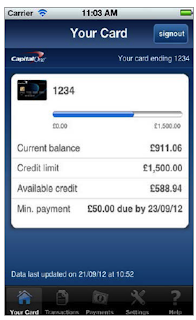
A number of banks, such as PNC, Capital One and Barclays Bank, use bar charts to indicate balances in different categories (spend, save, credit available, etc.) while some vendors, such as MoneyDesktop leverage bubbles to illustrate basic insights.
Capital One (UK)
Analysis

Similar to the analysis reports offered by investment firms for years, retail banking PFM analysis tools provide a rather extensive review of financial wellbeing using strong visuals and optional widgets for different types of information (inflows, outflows, goals, budgets, etc.). In most cases, the widget options are prominently displays so a customer can customize their financial analysis.

Because of the extensiveness of the information available for analysis, only a few institutions globally have a smartphone app for in-depth analysis. This insight usually is across the online and, on occasion, tablet platforms. Danske Bank was considered to be one of the best cross-platform applications for analysis, allowing customers to easily view money coming in or going out by category across all platforms.

Another example of an excellent analysis PFM application found by Mapa was at BNP Paribas, where great iPhone and iPad visuals are used to provide simple analysis capabilities that are easy to comprehend (even if you don't understand French).

BNP Paribas (FR)

Enabling customers to compare spend and allocation with peers is a way that could eventually improve a person's finances by seeing how they are doing compared with others like them. In Mapa research, examining 48 leading retail banks across 10 countries, four banks of the five banks globally (all Dutch) enable customers to compare spending with peers (and only within internet banking). OCBC (SG) is now providing this feature as an iPad application.

Take Action

The most frequently used technique for banks to encourage 'action' is by setting saving goals. It was found that not only was this functionality easy to set up and grasp by the customer, but it could be applied across all platforms relatively easily. In some cases, the sharing of savings goals could be done across social channels like Facebook, even enabling the customer to ask friends for contributions toward a goal.

In some cases, such as with Simple, a customer can divert funds from a goal to make the desired purchase, increasing the engagement and functionality of the 'goals' PFM tool.

One of the more unique capabilities within the 'action' category was ING's tool that allows customers to see how much could be saved over time by making small sacrifices. For instance, by using certain assumptions, a customer can see the impact of forgoing a cup of coffee, packing a lunch, walking to work, etc. With a simple click, the customer can redirect an amount they would have usually spent on an item to their savings account.

According to ING research, 52 percent of Canadians said that they could change their spending habits if they could visualize the impact of sacrificing non-essential purchases.

ING 'Small Sacrifices' PFM Tool

Dozens of illustrations from leading banks across the globe are available in the very extensive 56 page report on PFM developed by Mapa Research. The report includes commentary as well as vendor interviews around the future of PFM.

Increasing PFM Engagement


As mentioned, getting customers to use the new tools that have been developed and are continuing to be innovated remains a challenge. Each of the PFM vendors interviewed for the Mapa report (Yodlee, Figlo, Meniga, Strands Finance) and subsequent to the publishing of this report (MoneyDesktop and Geezeo) emphasized their commitment to greater enrollment and engagement (beyond trying to get banks and credit unions to offer PFM services).

Innovative approaches used to improve use and engagement of PFM tools by Mapa Research included:
        • Seamless integration within regular banking services: Optional PFM add-ons will not be embraced by a populace that doesn't like budgeting. Instead, functionality should be part of the digital experience.
        • Intuitive and pleasing visuals: To appeal to a broad customer base, the PFM tools should be easy to understand and highly visual.
        • Segmentation of base: Instead of a one-size-fits-all approach, PFM features should be aligned with different segments of the customer base (mass, affluent, Gen X, Gen Y, investors, etc.)
        • Make it social: Allow users to engage with others through social platforms. It was found that this was effective when building and sticking to goals even though the integration of social channels and banking is by no means commonplace in the U.S.
        • Provide encouragement: People respond to ongoing encouragement and instant feedback. Moven is a great example of a bank that provides this form of engagement.
        • Leverage Big Data: As mentioned by JJ Hornblass as well as reports from Cap Gemini and others, data must be leveraged more effectively to combine overall financial relationships, better understand customer needs and build engagement.
Moven Immediate Feedback to Generate Engagement and Encouragement

PFM Vendor Perspectives


To better understand recent and future developments in the PFM category, Mapa Research interviewed four PFM vendors in the development of the report (Figlo, Meniga, Strands Finance and Yodlee). In addition, I supplemented these interviews by allowing two additional vendors (Geezeo and MoneyDesktop) to provide insights to the same questions advanced by Mapa Research. A full copy of the questions and responses from Mapa are available in the appendix of the report.
Recent Developments

All six vendors questioned indicated a very similar emphasis around where current efforts are focused. The key areas of development included:
        • Tighter integration of PFM functionality within current banking functions
        • Focus on mobile and tablet platforms
        • Better use of data for budgets
        • More financial analysis and forecasting
        • Ability for improved aggregation and categorization
        • Better goal and advice functionality (including buy/no buy decisioning tools)
        • Increased segmentation and customization (including small business)
        • Better marketing capabilities within offering
        • Alert functionality

Common Objection From Banks Around Implementing PFM

The PFM vendors were asked what banks view as the primary stumbling block to the implementation of a PFM solution.
        • Lack of internal resources to implement and deliver a PFM solution
        • Lack of proven demand, ROI and business case support
        • Internal development of primary PFM functionality
        • Internal data issues (inability to consolidate customer information)

How Can Customer Adoption Rates Be Improved

Each vendor in the survey as well as the two additional vendors I interviewed agreed with many of the ways that can improve customer adoption and engagement.
        • Improved training of the front line
        • Proactive marketing of the service through direct and digital channels
        • Online videos illustrating benefits and use
        • Simplify and improve UX/UI all components of PFM for the customer
        • Move beyond online platform to mobile and tablet
        • Target potential user groups

Evolution of PFM Over Next 12 Months

The vendors were asked how PFM will evolve and how consumers will/or won't embrace PFM in the future.
        • Better cross-channel integration
        • Better data integration
        • Better insight and analytics moving towards 'tool of empowerment'
        • Continuous enhancement of user experience (simplicity)
        • Segment-based PFM (small business, wealth management)
        • Potential as fee-based service

Lipstick on the PFM Pig or a Brand New Pig?


After years of simply trying to take an overarching money management concept and add more and more functionality (PFM lipstick), it appears that the PFM marketplace is beginning to take specific components of personal financial management apart and integrate the tools within the banking services. In other words, instead of focusing on putting PFM on steroids, banks, credit unions and vendors are finding ways to bring the benefits of money management within the platforms and accounts in a more simplified manner.

More importantly, PFM is becoming part of what banking is in real time. And instead of being only a rearview mirror view of finances, tomorrow's PFM will look ahead with advice as to how to prepare for the future and provide 'foresight' for a stronger financial well being.

It appears that the biggest change around the definition of PFM is that bigger may not be better after all. Instead, the original concept of PFM is being broken down into easier to swallow pieces of insight that are more desired and more valuable to the consumer and the bank. 

Maybe we have moved from putting lipstick on the PFM pig to serving delicious pieces of PFM bacon, sausage, pork chops, etc. The question may now become . . . will the consumer pay for these new treats?


Additional Insight


Strategies for PFM Success - Aite Group (Sept. 2012)

PFM is Dead, Long Live FPM - Snarketing 2.0 (September 2012)


Personal Financial Management: Five Things FIs Need to Do in 2011 - Yodlee & Javelin Strategy and Research (January 2011)


Subscribe to Bank Marketing Strategy Via Email


Wednesday, August 14, 2013

Today's Mobile Banking Apps: Table Stakes or Cutting Edge

There is no disputing that the U.S. mobile banking landscape is changing rapidly. Larger banks are setting the stage for broader market trends, while smaller banks (and even some regional players) play catch up in the development of new functionality.


What are some of the top U.S. banks doing that is innovative and what has quickly become table stakes in a game of mobile app one-upsmanship? And is mobile banking innovation becoming a value-added differentiator that can drive new revenues?


Over the past 18 months, mobile banking applications have evolved beyond the basics to include specialized functionalities, improved user experiences and an expansion of platforms supported. A year ago, mobile remote deposit capture (RDC) was live at only five of the top 13 banks. Today, it is a 'must have' banking application that has the potential to drive revenue. Similarly, P2P is now taking center stage at most banks despite some logistical hurdles, with five banks adding this functionality in the past 12 months.

How are banks keeping up with consumer demands? How are they keeping up with each other? What's next? In the third report in a series on the state of mobile banking released by the financial research and consulting firm Celent, a review of new application development is provided along with a glimpse into the future. 

In the 44-page report, The U.S. Mobile App Landscape: An Annual Evaluation of Mobile Banking at Top U.S. Banks, Celent found that larger banks tend to out-develop and out-adopt smaller institutions by a significant margin. “The channel is still relatively new, but leaders in the digital channel space are beginning to take offerings into the realm of value-added services that are context-sensitive, timely, and utilize big data", says Dan Latimore, senior vice president of Celent's Banking Group and coauthor of the report. "There’s a large disparity among digital offerings—industry leaders are light-years ahead of the laggards.”

Below is Celent's view of the mobile landscape as it continues to evolve. As can be seen, Emerging Capabilities include a more advanced stage of interaction with more knowledge-driven tools and analytics. While some of these may not be pursued by every organization, Celent believes most will be tomorrow's standard. Interestingly, some of the functionality in the Future Focus is already being implemented on a global basis (see previous post 'Banks Accelerate Mobile Banking Innovation', June 2013). 

While the future may be considered speculative, some components are beginning to appear at the more progressive institutions (U.S. Bank and BBVA Photo Bill Pay) and at some of the new players such as Moven, Simple, GoBank and BlueBird (see 'Challenger Brands & Disruptive Ideas: Learning From The NeoBanks', Financial Brand, August 2013).


Current Evolution of Mobile (Celent, June 2013)


Key Findings of the report include:
      • Mobile, and more broadly digital channels, have become core parts of banking in 2013. Mobile devices are now just as much a tool to keep people out of branches as they are to facilitate interaction. Consumers are more eager to engage through a smartphone, and as nontraditional players rush in to fill gaps left by legacy financial institutions, CIOs are beginning to feel the pressure to build out digital capabilities.
      • Digital channels are in a continuous process of evolution, proliferation, and adaption. While remote deposit capture was 'new' a year ago, it is now a basic functionality. Innovation in the mobile channels is ongoing with today's innovations quickly becoming tomorrow's table stakes. 
      • Banks are moving forward in their evolution of digital channels, but it's a slow and sometimes confusing process. It’s no surprise that banks aren’t considered innovators: it’s difficult, expensive, and risky to innovate. Yet, banking is entering a time of customer-centricity, where each institution defines this concept differently.
      • New functionality is on the horizon, but not yet front and center. This includes: 1) Speech recognition, 2) Social media integration, 3) Mobile PFM tools, 4) Easy access account balance, 5) Cardless cash withdrawal, 6) Debit card on/off switch, 7) Remote mobile bill pay, and 8) Biometric security.


How Are The Top Banks Doing?


Mobile is definitely moving beyond the replication of online banking services and into value-added features built to serve more specific use cases and even different segments of the bank (retail consumer, small business, wealth management, commercial, etc.). As shown above, the evolution is trending towards an environment where solutions are being 'bought' vs. 'built' and where engagement of the customer on a contextual level is beginning to be achieved. 

Using a features and functionality scoring sheet for each mobile platform (developed as part of the previous Celent research 'What's App, Doc: A Biannual Evaluation of Mobile Banking at Top U.S. Banks'), Celent evaluated apps for the Apple iOS, Android, Safari web browser and text banking. Scores were compiled for the top 13 banks in the U.S., with banks grouped into three categories based on the following criteria:
            • How easy was it to find the desired function?
            • How easy was the app to use?
            • Was the information presented intuitive from a navigation perspective?
            • Did the app take advantage of standard OS functionality to enhance familiarity?

A very in-depth evaluation was performed for the following functions on each mobile platform to determine breadth of offering. Each function was evaluated on a number of levels with values placed on each of the following capabilities: 
            • Balance inquiry
            • Recap of previous transactions
            • Bill payments
            • Moving money (RDC, A2A, P2P, etc.)
            • Merchant-funded rewards
            • PFM tools
            • Social Media integration
            • Geolocational tools
            • Marketing and sales
            • Security
            • Customer support
            • Personalization
            • Alerts

Celent grouped the banks in this report into the following three categories: most improved, noticeable improvements, and minimal/ no changes.
        1. The most improved apps include Bank of America and US Bank.
        2. Apps with noticeable improvements are Capital One, Wells Fargo, and HSBC.
        3. Banks with minimal or no changes to their mobile offerings include BB&T, Chase, Citibank, Fifth ThirdPNCRegions BankSunTrust and TD Bank.

According to Dan Latimore, "While Chase continues to build on their mobile excellence, some apps have been playing catch up." And while not making significant changes does not necessarily mean the mobile banking site was poor, standing still in today's mobile marketplace is not a solid long-term strategy.

Interestingly, in an unrelated research study conducted by Xtreme Labs for the period May 18 - June 1, 2013, entitled 'U.S. Banking Apps Report: Customer Reviews', a different set of 'winners' emerged based simply on the number of positive and negative customer ratings in both the Apple iTunes Store and Android Play Store. A minimum number of reviews were required for any app and an averaging of reviews was used for scaling. While significantly less scientific than the Celent research, the Xtreme Labs research provides a social media commentary on customer sentiment around mobile banking apps.

Of the largest banks reviewed by Xtreme Labs, RBS Citizens, had the highest score on the iOS platform (4.5 out of 5 and a 93% favorability rating) and one of the best scores on the Android platform (4.5 out of 5 and a 97% favorability rating). USAA, American Express, Wells, TD Bank, Chase, BB&T and Regions and U.S. Bank also scored well in this study.

Conversely, PNC (not virtual wallet), SunTrust, TD Bank, Fifth Third, Bank of America, Well Fargo and USAA also appeared on the negative side for the iOS platform in the Xtreme Lab study, indicating that the mobile apps were not considered the best for everyone.

Issues to Address in Future


Beyond the need to explore the development of additional functionality that makes engagement easier and leverages big data more effectively, Celent saw some trends they believed warrant attention in the near term.

Marketing and Cross-Selling

As was noted in my June 2013 blog post around Mapa Research's study of global mobile banking innovation, U.S. mobile banking apps still haven't leveraged some of the power of cross-selling from a mobile device. While the Celent research noted that many banks have attempted some form of 'product pushing' or advertising of services, there seems to be minimal leveraging of big data insights to drive contextual offers. "Splash screens and real estate crowding banner ads should be left to online banking", say Latimore. "Apps should move toward offering up product suggestions (without sacrificing user experience) as well as being able to facilitate the beginning of an enrollment process, which can be finished at the branch, over the phone or online".

Mapping

While it is understandable that many banks may be a bit skittish around using Apple Maps for branch and/or ATM directions given early flaws with the iOS application, using Google Maps from within the Safari browser was found to be slow and 'clunky' compared to the integrated option from Apple. Celent believes the risk may be worth it. Another option (used by both PNC Bank and U.S. Bank) may be the use of augmented reality for locational guides.

App Design and Platform Changes

Celent noticed that a number of apps in the study had little or no change from the previous report from Q4 2012. While this may not seem out of the ordinary if compared to bank website redesigns, and certainly falls in line with the industry's normal 'wait and see' approach, this speed of change is not acceptable to most mobile users who are used to constant and frequent enhancements to apps.

In addition, as tablets of all forms have exploded onto the marketplace, banks have done a terrible job of developing applications that take advantage of this very unique platform. Beyond the tactile and length of engagement differentiation of this platform, the demographics of the typical user (more affluent and more digitally astute) warrants a greater focus.

PFM on Mobile

There is no disputing that PFM on mobile has yet to gain any traction. Banks are struggling to define what PFM should be and what it should look like on different channels as well as platforms. The majority of consumers are not attracted to charts and graphs on mobile devices (there is a segment however). But PFM on mobile may provide promise if looked at in the perspective of improved receipts, budget updates and even gamification. Merchant-funded reward integration is also possible with geolocational capabilities providing the ability for immediate rewards through the mobile device.

While some banks are testing some of these capabilities (most notably the neobanks like Moven as covered here in my early 2013 blog post), there is quite a bit of debate on whether the investment in development can be recouped without a value-added pricing model.

According to Latimore, "Eventually, Celent imagines high-value advice on savings, alerts for overspending on a budget category, or GPS-enabled deals. The camera is another unique attribute to the mobile phone that can be used to provide a snapshot of spending."

The Long Road Ahead


Mobile banking has quickly evolved from being a more cost effective way to handle balance inquiries to a core component of every bank's delivery network. We have moved from a transaction focus to an engagement focus, with CIOs beginning to feel the pressure to build out mobile capabilities. 

With basic mobile transactions such as balance inquiry and moving money, simplicity is the 'new black'. With more sophisticated interactions, the use of 'big data' for insight dissemination and solution recommendations is the key to success. In all cases, Celent found a trend away from 'bolt-on modules' to more holistic approaches that will require significant investment.

While other industries have reached young adulthood in mobile integration, mobile banking is still in its infancy. With shrinking margins and more regulatory pressure, banks must determine if there is the potential for mobile services to generate revenue that can help offset development costs and replace lost fee income. Without fees from new value added services, what is the ROI of mobile banking? (see previous BMS post, 'The Revenue Power of Emerging Financial Solutions", August 2013)

According to Celent's Dan Latimore, "While mobile banking definitely expands a bank's ability to reach new and existing customers, and while there is significant movement by some organizations, there is still a long road ahead for others."

About the Report


The report reviewed is the third in Celent’s series on the state of mobile banking at top US financial institutions. The report examines mobile application offerings at the top 13 US banks in significant detail, beginning by looking at the state of the mobile market in the US. Celent graphically explains trends in mobile, and tries to make a case for what the future of mobile will look like. The report then dives deeply into the breadth of functionality and usability at each of these banks. Finally, each bank’s mobile application is profiled in depth, with accompanying screen shots to illustrate relevant points. This report is the best of its kind and is intended to serve as a guideline for conversations around how to strategically align mobile development with prevailing best practices.

A webinar on this study in conjunction with Kony, entitled, Tomorrow's Mobile Banking - Hear What Top U.S. Banks are Doing to Get a Glimpse Into the Crystal Ball is scheduled for September 11, 2013 at 2PM ET. 


Additional Resources


The U.S. Mobile App Landscape: An Annual Evaluation of Mobile Banking at Top U.S. Banks - Celent (June 2013)

Mobile Banker Vendor Solutions - Celent (April 2013)

What's App, Doc: An Updated Biannual Evaluation of Mobile Banking at Top U.S. Banks - Celent (January 2013)

U.S. Banking Apps Report: Customer Reviews - Xtreme Labs (July 2013)

Tomorrow's Mobile Banking - Hear What Top U.S. Banks are Doing to Get a Glimpse Into the Crystal Ball - American Banker Webinar sponsored by Kony (September 11, 2013)

Mobile in 2013: A Digital Digest Featuring Gartner Research - Kony (March 2013)


Subscribe to Bank Marketing Strategy Via Email


Tuesday, May 28, 2013

A Cheat Sheet to Perfect Creative

Give your creative the FREEDOM of a tight strategy.

What I love about what we do is that there are infinite ways to address the same problem.  There are few rules and usually, the crazier the idea, the better.

You want your creative to stand up and take notice.  You need it to be clear and concise.  To get there, you have to be focused!  

That's the job of the creative brief.  In one to two pages, describe exactly what needs to happen.  A great creative brief can lead to killer creative.  It's also your sanity check to know whether the creative is simply entertaining or on strategy too.

Here are the 5 areas to focus on when you're focused on creative:

1. What do you want to do?
Why are you spending this money?  What do you want the effort to accomplish?  How will you quantitatively know if it worked or not.
  • What does the advertising do for the brand?
  • How will the objective be measured?

2. Who are you talking to?
It's easier to write to a person than to a nameless group.  Who do you want to talk to?  Give them a name, a face, a personality and needs:
  • What do they look like? What do they like to do? What is their economic standing?  What makes them tick? (be as specific as possible)
  • What motivates them?  Why are they making this purchase decision? What's going on in their life?
  • When they buy, why do they choose you?
  • When they don't buy with you, why not?
  • How do they FEEL when they make the decision?  How do you WANT them to feel (tone)?

3. The ONE Big Thing
Let's face it, we're lucky if anyone ever sees our work ... we're blessed if they care ... and if they take away ONE message, we've done our job.  What is the ONE big thing that you want them to know?
  • How does it make you different from the competition?
  • So what? (Benefit) What problem are we solving?  Why should anyone care?
  • Prove it (3-5 supports - Prioritize) Why should they believe you?
  • Who's voice is telling them?  Are you the trusted old uncle or the hip young friend or the crazy granny?

4. What do you want them to do?
How will the audience help you achieve your objective?  Do you want them to feel something?  Pick up the phone?  Go to a URL?  Run to your location?
  • Is it easy for the target to do what you want?
  • Who answers the Call to Action?  Are they prepared?

5. Thou Shalts and Thou Shalt Nots
What are the rules? The must and must nots.
  • Budget
  • Schedule and duration
  • Media options: Print? Broadcast? Web? Direct Mail? SEO? Point of Sale? Outdoor?
  • What does the staff need to know or do?
  • Mandatories (logos, icons, legals, etc)

Now go back and start crossing words out.  Keep the brief ... well, BRIEF!  The more focused you are, the less sidetracked the creative ideas will be (You know creatives ... show 'em something shiny and you lose them for hours!).

From the brief, try to come up with at least 3 good ideas:
  • The safe idea
  • One that scares the hell out of you
  • Something in between

Finally, when the work is complete, go back to the brief and start checking off each item.  If the work addresses each element of the brief, then it should be on strategy ... focused ... and ready to generate business.


We bring these marketing philosophies to credit unions and community banks nationwide, and would love to bring them to your institution too.  Contact us to see how.

Nearing 230,000 visits worldwide, we hope that you enjoy this blog.  If you find it helpful, please share it with your colleagues.  Also, check out our YouTube Channel for short video blogs about financial marketing.  

MarketMatch is also a nationally and internationally requested speaker.  Contact us to bring our marketing ideas to your next conference.

937-426-9848
Follow me on Twitter @egagliano


Tuesday, May 21, 2013

You DO NOT sell deposits and loans.


Human beings make emotional decisions 
and support them with logic and rationale.

It's a bit of a fault, but it's partially what makes us who we are.  It's one of the many beauties of humanity.

Think about some of your most recent purchases...

"I need that Fred Flintstone sized driver to hit the inch and half wide ball."

"The Louis Vuittons will be 100 times more comfortable and last 100 times longer."

Really?!?!

So, if we are emotional creatures, why does so much bank marketing revolve around "Free Checking!" and a big ol' rate?

The truth is that we do not sell checking accounts ... or loans ... or CDs.  People can get THOSE things anywhere!  Let the Wells Fargos and Bank of Americas of the world take the obvious route - they can afford to be lazy.

You, my credit union and community banker friend, are different ... better ... smarter.  You understand that every single  day - with every single branch and electronic interaction - we are dealing with people's money.  And aside from child care, what is more emotional than that?!?!

No, we do not sell products, we sell TRUST!  

Take a look in your lobby right now.  Those people aren't there for your free checking, and they likely past a competitor or two to get to your branch.  They are there because they trust you.  In their mind, you are the expert.

When you sit down to plan your next campaign or draw-up your next brochure, start your planning where your target audience starts it's decision making ... with emotion.  THEN, you can support it with logic and rationale.


We bring these marketing philosophies to credit unions and community banks nationwide, and would love to bring them to your institution too.  Contact us to see how.

With nearly 223,000 visits worldwide, we hope that you enjoy this blog.  If you find it helpful, please share it with your colleagues.  Also, check out our YouTube Channel for short video blogs about financial marketing.  

MarketMatch is also a nationally and internationally requested speaker.  Contact us to bring our marketing ideas to your next conference.

937-426-9848
Follow me on Twitter @egagliano
