Showing posts with label smartphone. Show all posts

Sunday, July 14, 2013

Understanding the Mobile Banking Consumer

In order to unlock the vast potential of mobile banking, banks and credit unions must better understand mobile banking preferences of current users while alleviating the fears and lack of understanding of non-users. Broadly speaking, while convenience is the primary benefit cited by mobile banking customers, security fears remain the number one barrier to mobile banking growth.


As opposed to a 'one-size-fits-all' approach, financial institutions should consider segmenting the mobile banking universe for improved resource allocation and to optimize customer acquisition, utilization, retention and differentiation.


Mobile devices, including smartphones and tablets continue to transform the way consumers bank, budget, make payments and shop. In fact, having a mobile banking offering is now considered 'table stakes' to consumers when selecting a financial institution. According to the 2013 Federal Reserve Consumers and Mobile Financial Services Report:

      • 87% of the U.S. adult population has a mobile phone
      • 52% of the mobile phones are smartphones (internet-enabled)
      • 87% of smartphone users access the internet regularly (in the past week)
      • 28% of mobile phone users have used mobile banking over past 12 months
      • 48% of smartphone users have used mobile banking in past 12 months

While some financial institutions may be satisfied with this level of acceptance, mobile banking leaders understand that checking balances using a phone is not 'full engagement' and that growth of use beyond this level will require a better understanding of the mobile customer base and the barriers that keep non-users from using mobile banking. Banks and credit unions also realize how important this understanding will be as they try to optimize channels, reduce operating costs and identify new revenue sources.

According to a new report just released by Monitise and Cognizant entitled, 'Segment-Based Strategies for Mobile Banking', financial institutions need to better understand the mobile banking customer universe and may want to consider segmenting their customers based on mobile adoption, desired features and benefits, mobile devices and monetization potential. By segmenting the mobile customer base, the following questions could be answered:

      • What is the best way to segment the mobile customer base?
      • How do mobile adoption levels vary across consumer segments?
      • What mobile banking features and applications are preferred and by whom?
      • How do tablet users differ from smartphone users?
      • What opportunities exist for further monetization?
      • How can the mobile channel be leveraged for differentiation?

Understanding the Mobile Banking Consumer


Despite all of the industry discussion around the importance and growth of mobile banking, adoption levels still only average 33% across all segments and age categories. While younger, wealthier and more tech-savvy consumers are more engaged with the mobile channel, the challenge is to replicate these higher adoption levels with other segments.

Mobile Banking Adoption Across Age and Income Parameters
As can be seen above, the highest adoption rate for mobile banking is in the 25-34 age bracket with annual income above $75,000. Mobile banking is accessed primarily through mobile phones (32 percent) and tablets (7 percent), with 24 percent using both devices. As can be expected, the majority of consumers prefer smartphone and tablet apps as opposed to mobile banking web sites to access their accounts. The very oldest segment prefers text banking.

Consistent with the reality that the mobile banking channel is still in its relative infancy, the primary features offered by banks and desired by consumers are aligned around basic banking transaction functionality. Unfortunately, these functions have minimal potential for differentiation and do not increase engagement that will reduce potential attrition. In other words, these are nothing more than table stakes.

Top Three Mobile Banking Features

To move beyond a standard mobile banking offering, banks and credit unions need to provide increased functionality. We are beginning to see a response to this need with the introduction of remote check deposit and increased promotion of real-time alerts and advanced bill payment. The impact has been that some consumers are beginning to switch financial providers based on these features according to the research from Monitise and Cognizant.


More than 75% of the consumers surveyed also found the ability to personalize their experience important. Similar to the way in which financial institutions allow consumers to customize their ATM experience, consumers want to be able to rearrange tabs and functions within their mobile application, change appearances of their app and other customization.

While this personalization may feel like window dressing, the research believes these capabilities could increase retention similar to personalized debit and credit cards.


Security Concerns Remain Primary Barrier and Opportunity for Mobile Channel Growth


As innovator and financial industry futurist Brett King says, "Banking is no longer somewhere you go, but something you do." With more consumers moving away from the branch network, concerns surrounding mobile banking security remain the primary barrier to widespread adoption, especially in key demographics. This challenge can become an opportunity, however, for banks that provide enhanced security capabilities or possibly even guarantees.

According to the research conducted by Monitise and Cognizant (available here or here), 71% of respondents rated security features as 'highly important' in choosing or switching banks. Security is a major concern with mobile banking users (70%) and is the most important consideration for non-mobile banking users. 


Security concerns are not only prevalent with mobile banking usage, but are the most significant deterrent to mobile payment usage (the most engaging mobile banking function). Based on the results of the research, it appears there may be an opportunity to gain mobile payment usage if banks provided safeguards and guarantees for mobile transactions similar to those provided with card transaction. Otherwise, the value proposition of conducting a mobile payment vs. card payment does not seem to be present.


Deterrents to Mobile Payment Usage


The challenge is that consumers expect ease-of-use and seamless operation while also wanting effective security practices. These desires can conflict at times where multiple authentication processes are implemented. At this time, it doesn't appear any bank or credit union has found the perfect mix of security and simplicity.

Interestingly, mobile banking users appear to be ahead of the financial community in their desire for advanced security technology. According to the Monitise and Cognizant research, 68% of respondents believed biometric security features are important, while 35% noted that they are willing to pay for such protection. Of the different biometric options surveyed (fingerprint, voice and facial recognition), Fingerprint matching was the overwhelming favorite of most consumers.


An area where banks and credit unions could respond to the consumer's desire for personalization as well as providing a high-engagement security solution would be through mobile alerts. According to the research, the demand for these types of alerts is prevalent across all income segments.


Note: Preferred method of notification survey results and expanded discussion of mobile wallet features and benefits are available in the full report here or here.


Mobile Security Options


While this post is not intended to discuss how banks should proceed with mobile security, there are good references available that discuss options. 

In an excellent report in Bank Systems and Technology published last year entitled, "5 Critical Strategies for Mobile Banking Security," it was emphasized that banks and credit unions are challenged by the somewhat conflicting consumer desires for increased security and increased ease of use. Based on interviews with leading industry analysts from Forrester ResearchMercator Advisory Group, Aite Group and ABI Research, possible strategies were provided:

      • Risk-based authentication and anomaly detection
      • Application based security features
      • Out-of-band authentication (separate device)
      • Mobile operating system security
      • Expanded defense minded devices
While Bank Systems and Technology acknowledged that it would be simple to suggest that banks go all in with all five strategies, that’s not a viable option for resource-constrained financial institutions, which need to make trade-offs and allocate security budgets based on customer needs, mobile strategies and marketplace dynamics.

Tablet Banking Differentiation


Until recently, many banks simply expanded the dimensions of their mobile phone banking application for tablet use. But tablets are quickly emerging as a user interface which provides unique challenges and opportunities for financial institutions. According to the Monitise and Cognizant research, 41% of mobile banking consumers would prefer to use their tablets as opposed to their smartphones. This preference increases to 60% among tablet owners and is even further pronounced among affluent consumers.

The research stresses that consumers use their phone and tablets for different purposes. While smartphones are used for more simple and immediate needs (balance inquiries, balance transfers, etc.), tablets are less transaction-driven and are used more for personal financial management (PFM) functions. The tablet's unique functionality also provides an excellent platform for advanced cross-selling and relationship building.

Top Features for Tablet Banking

Mobile Banking Segmentation


The Monitise and Cognizant research identified five consumer segments based on the use of mobile banking services, age and income level of the consumer. While this segmentation may not be perfect for every organization, it is a very good starting point for identifying mobile banking segment needs and ways to increase usage and wallet share.


A further description of the five segments provides additional insight:
  • ASPIRING BLOOMERS: This segment is digitally inclined but not among the first to adopt mobile banking. However, they access mobile banking services at least once a week. Mobile banking features such as checking account balances, transferring funds and remote payments are important. Consumers in this segment are willing to try and adopt advanced features such as mobile photo bill pay, virtual wallet services and near-field communication payments. To retain and further penetrate this segment, retail banks can educate these consumers about advanced features through direct marketing campaigns.
  • ARDENT AFFLUENTS: This segment is highly engaged with their mobile devices. They use advanced features such as mobile photo bill pay, and are interested in receiving expert guidance on personal finance and investments. They seek value-added services such as spending pattern analysis, loyalty rewards/points, shopping updates and portfolio monitoring. Sustaining this segment’s interest in mobile services by keeping up with their innovation needs can help retail banks acquire and retain this segment.
  • LIBERAL USERS: This segment consists of consumers between the ages of 35 and 54. Their average annual income is between $50,000 and $100,000. They use mobile banking, but not extensively. They also seek advice to help them improve how they manage their finances. This segment will respond best to services related to money management.
  • CAUTIOUS SENIORS: These consumers are value seekers. They are interested in products that offer tangible rewards. This segment is also highly sensitive to mobile security concerns. To make mobility more palatable to them, retail banks can extol the virtues of mobile banking, including its safety and security.
  • DISINCLINED CONSERVATIVES: This segment has serious concerns about the safety and security of mobile transactions. Currently available banking services meet their existing needs. Retail banks can gain from informing them about the benefits of mobile banking and alleviating their security concerns. This could encourage this segment to try mobile banking.
Addressing the needs of individual segments (or deciding to ignore some segments) provides the foundation to increase adoption of mobile banking services within a bank or credit union. By targeting efforts to specific segments, as opposed to marketing to all consumers in the same way, will better optimize marketing investments and lead to quicker returns on investment.


Based on the research, the following recommendations were provided to mobile banking developers and financial marketers:
      • Remote check deposit should continue to be promoted due to being rated as the most important mobile banking feature
      • Additional innovation must be ongoing since consumers are making buying decisions based on mobile capabilities
      • Real-time, customizable alerts should be given top shelf attention and promoted aggressively due to their importance as a security and financial management tool
      • Other security features need to be enhanced and promoted. This is the key to future mobile banking (and mobile payment) adoption
      • Personalization of the mobile experience should be given priority since this can reduce attrition
      • All functionality should be simplified on the mobile platform. This is especially true of mobile payment processes that do not provide additional value compared to alternatives today
      • Tablets applications should be customized, with capabilities matching the advanced functionality of the channel
      • Leverage advanced technology for a better user experience (online chat, voice activation, videos, etc.)
      • Segmented customer experiences addressing the unique needs and usage of the various segments similar to the recommendations below.

Survey Methodology


This survey was conducted online among a nationally representative sample of approximately 2,100 U.S. consumers, roughly 700 of whom are mobile banking users, during March and April 2013. Data was collected on mobile banking sentiments, preferred features of smartphones and tablets, attitude towards mobile payment services and the major concerns regarding mobile banking. 

Additional Resources


Segment-Based Strategies for Mobile Banking - Monitise and Cognizant Research (July 2013)

Driving Mobile Banking Adoption Via a Refined Consumer Segmentation Strategy - Monitise and Cognizant Research (July 2013)

The Mobile Moment: Barriers and Opportunities for Mobile Wallet - Chadwick, Martin and Bailey (June 2013)

Mobile Banking and Technology Center - American Banker Research Site


5 Critical Strategies for Mobile Banking Security - Bank Systems and Technology (June 2013)


Subscribe to Bank Marketing Strategy Via Email


Wednesday, June 19, 2013

Banks Accelerate Mobile Banking Innovation

The acceptance of mobile banking has grown more quickly than most financial institution futurists could have imagined. The impact of channel migration is changing the foundation of banking as we know it, with banks now being carried in customer's pockets and handbags wherever they go.


This seismic shift in consumer behavior is prompting banks around the world to innovate their mobile offerings at breakneck speed. The question is . . . what will the next generation of mobile banking look like? And how should banks respond?


In the new insight report entitled, "Mobile Banking 2013 - Are You Following or Leading?", Mapa Research provides an in-depth quantitative and qualitative review of the mobile banking offerings of 67 banks in 14 countries to find the best of recent innovations in the industry. Using a panel of live bank accounts from around the world, the report has close to 100 visual examples of mobile innovations including reviews of 15 additional offerings that put the best and most recent mobile banking developments under the microscope.

The report debunks a number of myths that seem to be prevalent both inside and outside of the financial services industry:
      • The largest banks have been hampered by legal constraints and legacy systems meaning ‘risky’ or innovative ideas have been shelved. Innovations are coming from large traditional banks as well as nimble mobile centric disruptors
      • Few banks let customers make payments to new payees in mobile banking. In fact more do than don’t
      • Payments to mobile/email services have been pioneered only by the most innovative banks. Again, the banks who don’t provide this functionality are now in the minority
      • Meaningful customer support and advanced functionality such as PFM and share trading are hard to deliver on mobileIn fact more and more banks are proving that these features can be deployed successfully

Preview of Mapa Research report available for free download here

Devices and Platforms


As has been documented by various sources in the past several months, mobile banking has been adopted at a much faster rate than any other banking technology. In fact, at some institutions, the number of online banking sessions conducted from a mobile device currently exceeds the number through non-mobile channels (while the mix of transactions performed at a computer, tablet and smartphone differ).

With smartphone penetration reaching the tipping point, it is not surprising that all 67 banks analyzed by Mapa provide native apps for both the iOS and Android platforms. In addition, 3 in 5 banks also have either a Blackberry (43%) or Windows (39%) phone app, with only 25 percent having both. 

As has been the case since the beginning of the mobile banking revolution, most institutions also have a mobile optimized web product (75%), with banks staging the introduction of innovations across different platforms at a different pace based on the platform penetration within their customer base. Interestingly, only 4% of the banks reviewed have built a fully responsive website.

Current Mobile Banking Functionality


While the 'table stakes' for mobile banking offerings continues to change, Mapa analyzed how banks are currently providing core mobile banking functionality to customers. The primary areas reviewed included:
          • Registration and login
          • Understanding basic financial status
          • Transacting
          • Communicating with the bank
Registration and Login

With security and privacy being at the forefront of concerns for mobile banking customers, balancing the need for robust authentication with ease of registration and simple ongoing use requires striking a delicate balance for banks. As can be expected, there is greater scrutiny during the initial registration process than is required after the registration is complete. That said, U.S. financial institutions seem to be taking a more conservative approach than their counterparts overseas, with most requiring an ongoing two-factor authentication with more information required at login.

The two most common approaches found in the research are the use of cookies to remember online banking usernames and the use of SMS verification in conjunction with account/card numbers for first time registration.


Understanding Basic Financial Status

While all banks reviewed allowed customers to view balances and see recent transactions, the ease of access to this information and depth of insight differ rather significantly. Eleven of the banks reviewed (none in the U.S.) allow customers to view their balance before login. 

While there are examples of organizations that provide this functionality in the U.S. (GoBank's 'balance slidebar' being the most notable), the balance between privacy and simplicity keeps many banks on the sidelines. Interestingly, the availability of pre-login balance was voted as the most favorite feature of CommBank's Kaching offering.

The Mapa research provides many specific visual examples of how banks around the globe are still grasping for the 'sweet spot' of PFM on mobile and how to visualize the customer's financial position. Some banks reviewed provide a snapshot of a customer's complete financial position using easy to understand graphics, while others provide just a transaction overview.

PNC's Virtual Wallet provides graphic view of current and future financial position

Transacting

The movement to a pure mobile wallet environment has been much slower than projected (for reasons that are better covered in another blog post), but the options for P2P payments and transfers are increasing at a pace consistent with each bank's risk tolerance and internal compliance perspective. As a result, almost all banks allow for external payments and internal account transfers, while fewer provide a means to pay via mobile phone number or email address or to make external payments to a new payee. 

Only the most progressive banks reviewed allow payment via QR code or 'bump' with 3 percent providing a social media mobile payment option as shown below (Commonwealth Bank in Australia and Commonwealth owned ASB in New Zealand). Additional banks allow for 'Facebook Banking' on the desktop according to the Mapa study.


Note: Mapa provides a very thorough review of different approaches banks have taken to allow for payments to new payees and how banks handle their pay-to-mobile service in the Mobile Banking 2013 - Are You Following or Leading report.

Communicating With The Bank

One of the most important, and least developed, areas of mobile banking innovation is in the ability communicate with the bank through the mobile banking application. Several examples of communication innovations are provided in the study. Some require a user to leave the mobile banking application to reach the bank, while others went as far as providing personal phone numbers, email addresses and even work schedules of primary contacts.


Mobile Banking Innovation


It is clear from the more than 100 Mapa visual examples in the research that exciting innovations are occurring at every mobile banking customer touchpoint and at every large bank in the world. From initial registration and transacting to channel integration and social media engagement, banks are leap frogging each other with new ideas that will simplify mobile banking while providing additional functionality.

When asked whether the gap between mobile banking innovation 'leaders' and 'followers' has widened or shrunk, Mapa consultant and one of the authors of the report, Joshua Grant stated, "The gap between the leaders and followers has been closed simply because many of the followers did not previously have a concrete mobile banking proposition." He added, "Going forward, some banks will be content simply to provide hygiene factors to their customers. But from working with many digital mobile teams around the world, these banks will be in the minority."

Core Functionality

Simplicity and engagement are the key objectives with innovations connected to most core banking functionalities. With the registration and login process as well as understanding finances, banks are pushing the envelope around the insight a customer can easily access. One of the banks reviewed by Mapa provides six recent transactions before login, while another actually enables the customer to display their balance as a widget on their mobile homepage upon authorization.

In addition, the ability to get real time categorization of purchases, understand future financial obligations and, in some cases, integrate photo capture of receipts within the mobile banking application sets banks like Moven, Simple, Chase, GoBank and American Express apart from many other competitors. The visual examples in the study make it clear that there is definitely not just one way to accomplish these tasks however.

While not reviewed in depth within this Mapa Research report, it was noted that the PFM functionality of virtually all of the banks analyzed differed significantly between the smartphone application and the desktop and tablet applications. Not only are many of the leading banks streamlining PFM for mobile, but also using many of the unique interactive capabilities of the tablet in displaying a customer's finances.

Payments

Innovation in the payments space is not limited to traditional banking organizations. Examples are provided as to how PayPal, Google, Square and others continue to set the bar with regard to simplicity and mobile integration of the payments function. While QR code payments appear to be a phenomenon mostly outside the U.S., the use of the smartphone camera for depositing checks and (more recently) paying bills is gaining momentum.

Mapa illustrates the steps for a PayPal mobile merchant payment 

Communicating With The Bank

Since the mobile channel was expected to offload many of the basic interactions the customer was previously having with the bank (balance inquiries, bill payments, depositing checks, etc.), building dialogue options into mobile apps has lagged some other innovation categories. That said, Mapa does provide examples of how banks allow for feedback generation within the mobile app (ICA Banken), customized push notifications as opposed to SMS or email messaging (Skandia Bank, Bank of America), and even how a couple banks are providing offers via mobile push notifications (Standard Chartered).

The best example of communication innovation within the mobile platform (my opinion) can be found where banks are integrating live chat functionality into their mobile apps to provide instant access to customer support. Both BMP Paribas and NatWest provide this capability, with NatWest allowing for specific account queries.

Channel Integration

Unfortunately, most mobile banking applications traditionally have been the outgrowth (miniaturization) of a bank's online banking application, thereby creating channel silos as opposed to a fully integrated functionality. This is changing, however, as more of the larger banks building new mobile applications from the ground up, integrating branch, online, ATM and other channels seamlessly.

Examples of using a mobile device to get cash without a card at an ATM (NatWest, Bankinter, IsBank), authenticate transactions made online, and booking appointments at a branch (ING Belgium), all help move banking to a more omnichannel environment.


Customization and Social Media Integration

It is clear that leading banks are just beginning to allow customers to customize their mobile banking experiences through personalization (adding photos). Eventually, it is believed that the ability to customize a mobile banking app will increase as improvements in some of the basics of mobile banking are completed. The objective of introducing personalization is to increase engagement, use and loyalty to the bank's brand.

Investment in mobile social media strategies has also lagged more basic functionality as banks continue to try to validate the ROI of this endeavor. There are some standouts in the banking industry, however, who have built their mobile banking platform with social media integration in mind as shown in the Mapa research.

Joshua Grant from Mapa notes, "A key trend is the social aspect of mobile banking. Banks are now including themselves in their customers’ personal dialogues by allowing them to, for example, request payments from friends, send photos and messages along with payments, share financial goals and access community support. Personalization and communication with the bank are also very active areas."

As mentioned, social media integration within the U.S. continues to lag, with some notable exceptions by USAA and Moven.

Voice Navigation

One of the more exciting areas of innovation is the ability to conduct basic transactions with voice commands. According to Bank Innovation, US Bank will soon begin offering voice control technology to users of its FlexPerks mobile app. The technology is being provided by Nuance, a provider of digital speech and imaging tools. The bank will be using Nina, the Siri-like virtual assistant that USAA has been using for its 2.5 million mobile customers.

The benefit of this innovation is that customers can navigate around the mobile banking application using voice commends in a hands-free mode. Mapa notes that BBVA is also experimenting with voice technology.

Monetizing Mobile

At a time when cost reduction and revenue enhancement are at the top of every banker's list of goals, the ability to potentially extend the benefits of mobile banking to include online and offline commerce is enticing. While early mobile applications have been of the standalone variety that can be accessed by both customers and non-customers, some banks are attempting to integrate rewards platforms and internal product offers within the mobile platform.


Bank of America may be the first to to provide notification and redemption of merchant-funded reward offers within the mobile banking application. Other banks are testing gamification around online and mobile activity or associated with Foursquare check-ins. Integrated rewards are also prevalent in non-banking mobile applications by Square, Shopkick and Starbucks.

The Future of Mobile Banking


It is clear that the marketplace will be continually evolving with new competition from traditional banks and non-banks. To stay relevant, banks will need to stay in touch with consumer mobile expectations and the needs of the bank. New players will likely emerge including aggregators like Mint and mobile wallet providers like Google and PayPal.

According to Mapa's research chairman Mark Pavan, successful banks will need to be reactive, responsive and forward-looking. Strategies of successful providers will include:

      • Exploring many different opportunities simultaneously. The market is moving too quickly to take on a single mobile innovation initiative at a time.
      • Collaborating with external providers to fast track launches (this was evident with Commonwealth Bank's Kaching)
      • Segmenting features against needs with simplicity being the focus of new innovations.
      • Thinking buy rather than just pay like has been done by American Express and a number of other American banks.

Looking forward, banks will not only have to do more of what has been discussed above, but they may need to engage more expert contractors to keep the innovation process active. Some banks are opening up their APIs to third parties to create add-on services. Differentiation through mobile is possible even though the cycles may be short. 

Other areas of innovation include mobile banking beyond smartphones such as wearable technology (Pebble) and innovations like Google Glass as well as new security solutions that include voice biometrics, fingerprint scanning and iris recognition.

Finally, while it may be easy to look at other bank's innovations, there is really no one-size-fits-all approach according to Mapa's Joshua Grant. "The most important thing is that senior management buys into mobile – some of the most innovative digital teams are hampered by constraints from above."


A download of the Mapa Research preview deck (including an excellent diagram of the current and future generations of mobile banking) is available for free download here with information on how to purchase the complete 70 page research report. 

Subscribe to Bank Marketing Strategy Via Email


Tuesday, May 7, 2013

Building A Winning Mobile Banking Strategy

Mobile banking has moved quickly beyond being simply online banking using a smartphone. It is at the hub of the customer relationship and is quickly becoming a point of differentiation and a potential source of revenue for progressive banks.

As smartphone penetration continues to increase, so do consumer expectations. To keep up, banks need to continuously review the best mobile banking strategies worldwide, developing those solutions that address customer needs and leverage the benefits of the channel.


To assist banks with the development and implementation of a successful mobile banking strategy, Forrester Research is developing a 12 chapter Mobile Banking Strategy Playbook. Within this playbook, extensive research is being compiled around marketplace assessment, mobile strategy development, optimal organizational structures, technology selection, best practices, measurement benchmarks and ways to continuously improve the mobile banking experience.


As part of the review of mobile banking best practices, Forrester just released their 2013 Global Mobile Banking Functionality Rankings (with U.S. and U.K. breakout reports) ranking the mobile offerings from 15 of the largest banking organizations in the U.S., Canada and abroad.

While only ranking some of the largest banking organizations worldwide, this research is invaluable to any bank wanting to see what the best in our industry are doing. Beyond rankings, this research also provides extensive examples of innovative mobile banking apps and advanced functionality (Purchase report here).

Subscribe to Bank Marketing Strategies

Organizations were judged on the following:

          • Range of touchpoints (devices and platforms supported)
          • The enrollment and login process
          • Account information and money management capabilities
          • Transactional features
          • Service features
          • Cross channel functionality
          • Sales and acquisition capabilities
          • Overall usability

While no firm is the best in every category, the evaluations provide insight into the strategic challenges and opportunities available to banks of any size.

Of the banks evaluated, Chase mobile banking was ranked the highest overall with a score of 71 out of 100, while Spain's la Caixa come in second with a score of 67 (the average score of all major banks evaluated was 56 out of 100). Chase's transactional functionality was highly regarded as was la Caixa's native mobile and tablet apps across all four of the major operating systems.

Overall, the large banks evaluated scored best on the range of touchpoints and account information, but poorly on sales and service features that are important to customers.

Peter Wannemacher, analyst for Forrester, says, "The most obvious missed opportunity among the 15 banks reviewed is that few are making effective use of context to make information more relevant to customers. Sales is another big missed opportunity, with many banks not even trying to cross-sell products and services through the mobile channel."

One of the key findings was that, while there are definitely examples of successful mobile banking implementations, far too many banks are not doing much more than meeting the basic needs of the consumer, rolling out apps and features without a clear assessment of where customer expectations and business objectives align.

In fact, even though some of the larger banks were lauded for new applications and functionality, the industry as a whole still seems to be missing the mark in the eyes of the consumer (as referenced in the Feb. 7, 2013 Bank Marketing Strategy post entitled, 'Banks Not Meeting Mobile Banking Customer Expectations').

Best-In-Class Functionality


In evaluating the major global banks, the Forrester reports not only provided a benchmark for the current state of mobile banking functionality, but uncovered many 'best practice' examples in each category reviewed which directly impacted enrollment, use, engagement and revenue potential.

Supporting Mobile Touchpoints

With the range of mobile platforms increasing, it is important for banks to be able to provide support across all touchpoints (optimizing for size and shape of unit) and across alternative delivery methods, including two-way SMS banking, dedicated mobile website, downloadable phone apps and tablet apps.

While it may seem that everything is moving to either downloadable smartphone or tablet banking apps, there are still many reasons to support SMS banking, including alerts or even the initiation of bill payments or transfers via an SMS (as is done by la Caixa). Oh yeah, and not everyone has a smartphone yet, therefore requiring support of basic mobile features through SMS text banking.

The offering of dedicated tablet mobile banking capabilities has definitely lagged behind smartphone applications but provides greater promise in many ways due to the added functionality and preferable demographics of tablet users. While more and more banks have developed apps for the Android tablet and iPad, far fewer support either the Windows or Kindle platforms.

RBC Tablet Banking App With Digital Advice and In-App Video (Forrester, 2013)

Encouraging Mobile Banking Enrollment and Use

Thank goodness for early adopters. Despite roadblocks and painful enrollment processes that were significantly more challenging than for online banking, smartphone devotees have found a way to sign up for mobile banking and use the service. To move beyond moderate levels of adoption and use, however, will require simplified enrollment and ease of use. 

Forrester believes one of the biggest impediments to enrollment today is that many banks still require mobile banking customers to have an online banking relationship. This requirement obviously limits mobile banking growth to only a subset of online banking customers as opposed to allowing all customers to benefit from mobile banking. Citibank was noted as one of a growing number of banks no longer requiring online banking for a mobile relationship.

GoBank Balance Bar
Surprisingly, Forrester also found very few banks that let customers enroll for mobile banking using their mobile phones. This is obviously counter intuitive from the customer's perspective. Wannemacher suggests, "Digital banking teams should build processes that let customers enroll through as many channels as possible, including ATMs, branches, call centers, mobile and online." In addition, he suggests the elimination of any 'validation period' before a customer can access their account.

Once a customer is enrolled, some banks need to reconsider the process of requiring separate online and mobile credentials or multiple authentications. For instance, my GoBank account allows me to authorize the viewing of balances without entering my login credentials. In addition to seeing my balance without a complete login, GoBank also allows me to enter my mobile banking account with only a password (as opposed to multiple login credentials).

If a bank is going to require multifactor authentication, it is recommended that a consistent sign-in process be used for both the online and mobile banking relationships. This is currently being done by many large banks including Bank of America, Wells Fargo and PNC Bank.

Finally, it is important to have a bank's entire front line and customer service team familiar with the mobile banking platform and trained to answer questions from a perspective of having used the service themselves. Some banks have even provided incentives to employees for conducting customer training sessions.

Enhanced Account Insight and Money Management

Most banks get the basics right, from providing balances to allowing access to previous transaction history. The differences come in providing more than the 'basics' from a customer experience perspective. As mentioned above, a bank can differentiate itself by the ease of getting account balances. Interestingly, only a few banks currently allow histories as far back as 90 days, with Bank of America being the only institution reviewed that allowed searches by keywords.

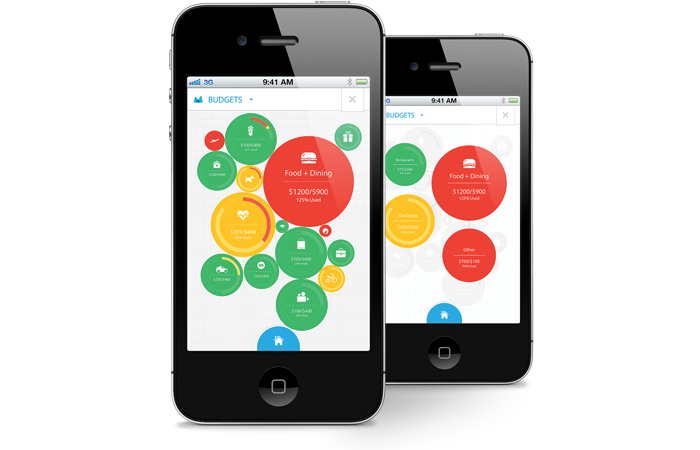
The real area of growth recently has been with the overlay of Personal Financial Management (PFM) tools within the mobile banking platform. Built internally or purchased from a variety of outside providers, the ability to provide visual interpretations of a person's financial health and ability to provide budgeting tools is exciting. 

One of the foremost providers of this type of functionality is MobileDesktop who was reviewed last Fall by Bank Marketing Strategy. Their mobile solutions provide easy to understand tools that can help make mobile banking the hub of a customer's financial relationship.

Expanded Transactional Functionality

Being able to perform transaction easily, using a smartphone, is the key to customer mobile engagement. The more a customer can do using their phone, and the more contextual interaction that can occur, the less likely the customer on the go will leave your bank. For instance, while doing internal transfers between accounts was rated relatively high for every U.S. bank (except HSBC that has no transfer capabilities), most U.S. banks make it much more difficult to transfer to funds to another bank.

In evaluating bill payments, Chase was recognized for being able to add a new payee directly from a mobile device, while U.S. Bank has just recently introduced the ability to pay bills by taking a photo of the bill itself. Chase and Citibank were also recognized for their P2P payment functionality, while there are several organizations in other countries (CommBank Kaching) that have moved beyond the requirement of a phone number and/or email address to allow payments via a Facebook connection.

More exciting may be the possibility to view transactions and the impact on budget immediately using a smartphone as is being done with the new start-up Moven. With this enhancement, customers will not only know what they spent and where, but how much they have spent at a specific location or purchase category in a given month as the purchase is being made. This will allow customers to make informed decisions before making a purchase as opposed to looking in the financial rear view mirror.

Mobile Service Accessibility

According to Wannemacher from Forrester, "As mobile banking becomes the primary way to conduct business for many customers, they will expect to be able to access a growing number of service-related tasks from within their mobile banking application." As the only criteria that all of the 15 banks in the study failed, it was believed that the ability to use a search capability for basic information or transactions using a mobile device was important.

Additionally, it was believed that customer assistance should be available instantly through the mobile device. In my own experience, even the more recent banks to enter the mobile competitive marketplace find this capability difficult to provide. In fact, none of the new banks, like GoBank or Simple provide a tool to get assistance immediately like Wells Fargo does through a Twitter link. For example, in multiple tests, Simple required as much as 24 hours to respond to a basic service question.

All of the banks reviewed provided some amount of balance, transaction or security alerts with varying degrees of customization. While some banks allow set-up directly from the mobile device, others require sign-up and structuring via the online banking application.

Cross-Channel Integration

While being able to access customer support directly from the mobile app a great example of cross-channel support, there are other ways for all of a customer's interactions with a bank to be integrated. Interestingly, while almost all of the banks reviewed by Forrester provided phone numbers for customer service, none provided instant chat, IM or a direct link for phone support.

One of the more dynamic ways to integrate channels is the way U.S. Bank, PNC and others are helping customer locate ATMs through an augmented reality functionality, providing a street level view of where branches and ATMs are located. This functionality is a great example of how the geolocational capabilities of a mobile device can provide benefits to both a customer and the bank. In the future, the availability of merchant-funded rewards could also be communicated in this manner.

Finally, the integration of social media within a bank's mobile banking application is being done much more extensively overseas than in the U.S. according to Forrester. Probably none do as much integration with social media like Facebook and Twitter as Commonwealth Bank of Australia. Not only do they show live tweets in real time on their mobile banking platform, but their integration with Facebook and YouTube content is one of the strongest in the industry. In fact, CommBank has recently added Kaching for Facebook as an extension of their traditional mobile banking product lineup.


Marketing and Cross-Selling Through Mobile

As mentioned at the beginning of this post, banks have yet to fully utilize the potential of the mobile banking channel for the marketing of additional services the way they have leveraged the online banking channel. While there are spacial and time limitations on what marketing can be done on a smartphone or tablet compared to a computer screen, potential still remains that is untapped.

U.S. banks did very poorly compared to their counterparts overseas, with virtually no marketing being done via mobile, with the exception of some brand reinforcement and banner adds by Wells Fargo. Potentially cautious about impacting the transactional focus of most mobile banking functions, U.S. banks have yet to leverage the massive amount of contextual insight available with a mobile device.

Forrester found Commonwealth Bank of Australia again to be one of the most advanced organizations from a perspective of marketing via the mobile platform, with Bank of America being recognized for what is beginning to occur with the availability of merchant funded rewards through the mobile device.


Promoting Mobile Banking


We are at the tipping point between the acceptance of mobile banking by early adopters and the potential of the mass market (some may say we have passed this stage). As a result, banks must begin to promote mobile banking to a wider audience using messaging that appeals to those consumers who don't understand the benefits of the channel.

Forrester research recommends the following mobile banking marketing strategies:
          • Integrate mobile banking within all brand marketing campaigns
          • Rather than promote mobile banking generically, promote individual functions and features ('there's an app for that')
          • Leverage target marketing opportunities to segments such as frequent users of online banking, bill pay, heavy ATM users and/or customers who frequently do balance inquiries
          • Leverage traditional media such as POS, ATM messaging, direct mail, email to support targeted efforts
          • Use social media like Facebook and gamification to promote mobile banking
          • Leverage video within the mobile banking site to explain the benefits of mobile banking and ways to use the service that are unique to the channel
          • Encourage current mobile banking users to recommend services to friends and family
          • Help customers overcome security concerns with guarantees
          • Provide interactive devices in branches that can demonstrate how mobile banking works
          • Fully explain all costs involved
          • Provide incentives for enrollment and use


Why Does This Matter?


As the penetration of smartphones increases, customer expectations are increasing as well. As more innovative applications are developed within and outside the financial services sector, the ability for banks to keep pace becomes both more difficult and more important. 

Online banking already seems to be hitting a threshold of acceptance, with some consumers skipping over this stage of financial engagement and moving directly to mobile banking. With the growth in tablet use, consumers are able to access highly graphic and sophisticated financial planning tools on the road or while multi-tasking in their home. New devices and new tools provide an increased level of engagement and contextual interaction to those banks that seize the opportunity.

While most banks already offer some mobile banking functionality, the challenge going forward will be to execute a strategy that is a differentiator both from a customer experience and revenue perspective. By building an agile, best-in-class mobile infrastructure, the impact can be realized through increased differentiation, lower cost customer acquisition, improved channel efficiency, enhanced customer retention, and greater revenues through cross-selling and up-selling of products and services and through merchant-funded rewards.

By executing and optimizing a successful mobile banking strategy that is integrated with a wider multi-channel strategy, banks will be better positioned for the future of both mobile banking as well as mobile payments.

According to Peter Wannemacher from Forrester, "Before rolling out more standalone mobile apps, digital banking leaders need to lay out a vision for how mobile will change the way their bank sells and serves its customers. With this in mind, digital banking in the future must be simple, ubiquitous, personal, empowering and most importantly, reassuring."

Additional Resources

2013 Global Mobile Banking Functionality Rankings: Forrester Research (April 2013)

2013 U.S. Mobile Banking Functionality Rankings: Forrester Research (April 2013)

Can You Bank On Your Banking App?: Varolii Corporation (February 2013)

2013 U.K. Mobile Banking Functionality Rankings: Forrester Research (April 2013)

The Mobile Banking Imperative: Forrester Research (November 2012)

Best Practices in Mobile Banking: Forrester Research (January 2013)

Mobile Banking: Financial Services Meet The Electronic Wallet: Free Ebook from Knowledge@Wharton and Ernst & Young (2013)

The Mobile Banking Strategy Playbook: Forrester Research

A  More Mobile Future For Banking: American Banker (March 1, 2013)